Which model fits your fermentation work
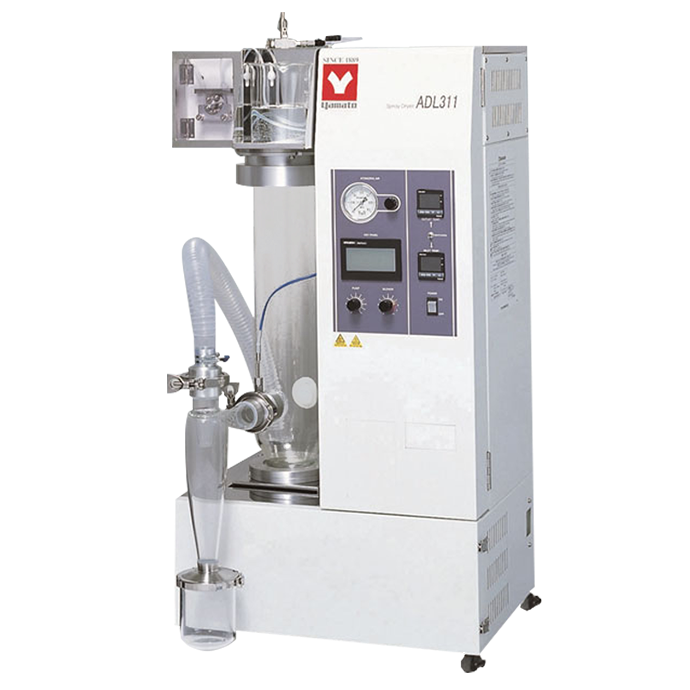
ADL311SA
R&D and formulation, small batches
- Compact and low-holdup, for developing on expensive early feedstock.
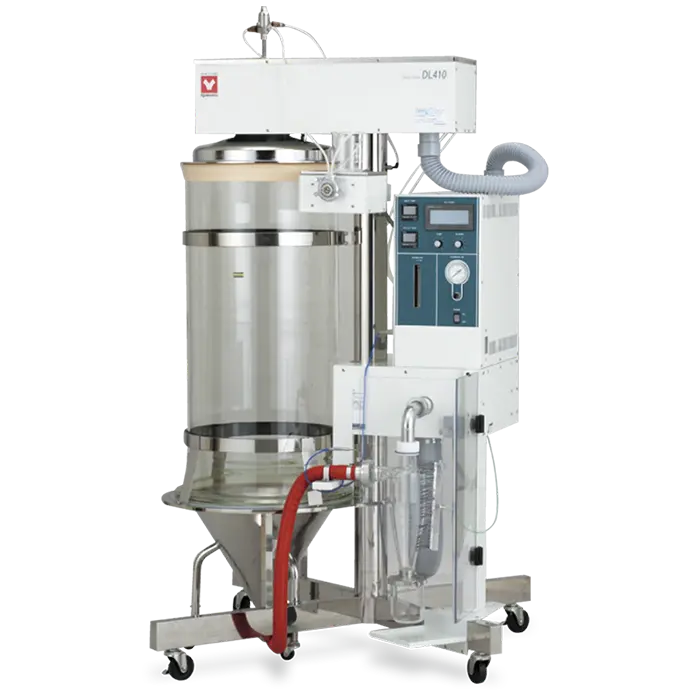
DL410
Pilot and kilogram-per-day production
- Up to ~3 L/h evaporation, 1 to 100 micron particles, 24-hour continuous runs.
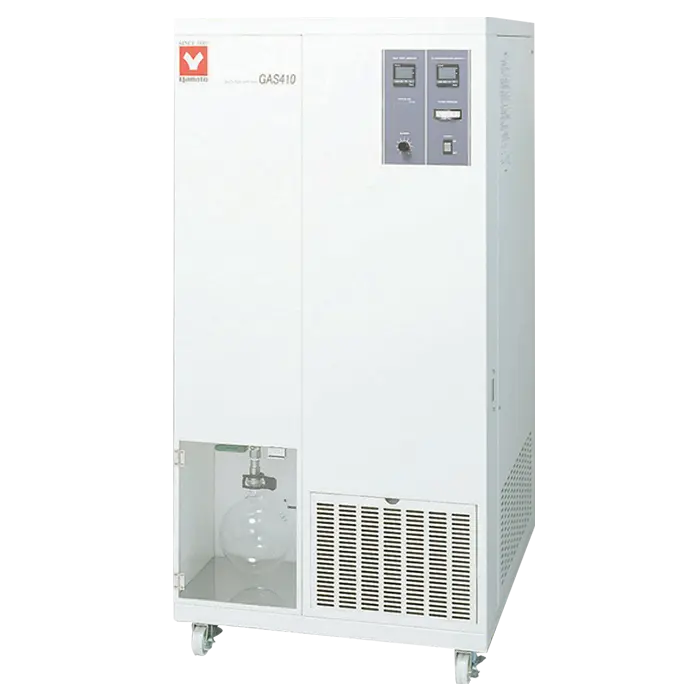
GAS410
Oxygen-sensitive proteins or lipids
- Inert closed-loop nitrogen drying for materials that oxidize in air.
Get in touch with us to validate your application
Why fermentation and protein products get spray dried in the lab
A product built on a powder eventually needs the broth or isolate turned into one. Spray drying does that in a single continuous step, fast enough to keep heat-sensitive proteins and live cells intact, which is why precision-fermentation and alt-protein companies bring it in-house once a contract dryer gets too expensive or won't take their feed.
The constraint that separates protein drying from ordinary powder drying is structure. Proteins denature and cells die when they sit in heat too long, so the process has to be fast and cool at the same time. Outlet temperature control and short residence time do that work, which is where a properly tuned dryer beats a bigger but blunter one.
Fermentation and alt-protein applications our dryers handle
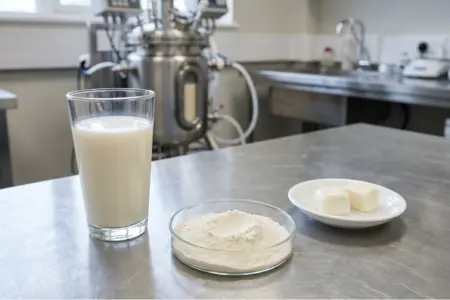
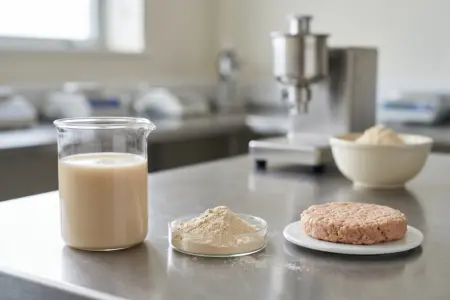
Precision-fermentation proteins
Dry animal-free dairy proteins such as casein and whey-equivalents straight from fermentation broth.
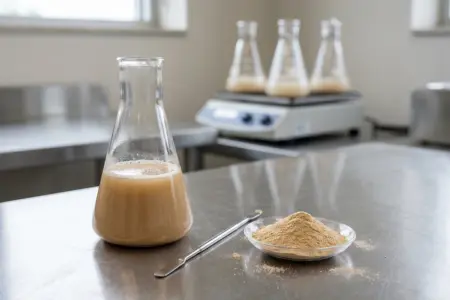
Plant protein isolates
Produce pea, soy, and other plant-protein powders for meat and dairy alternatives.
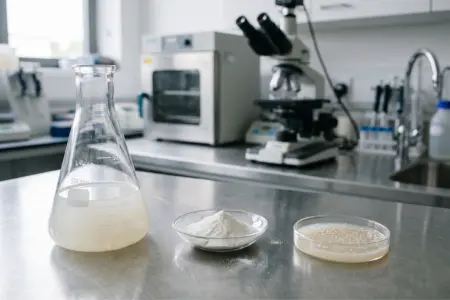
Microbial and single-cell protein
Dry microbial biomass and single-cell protein into a stable, handleable powder.
Live cultures and probiotics
Preserve cell viability through drying with the right carrier and a low outlet temperature.
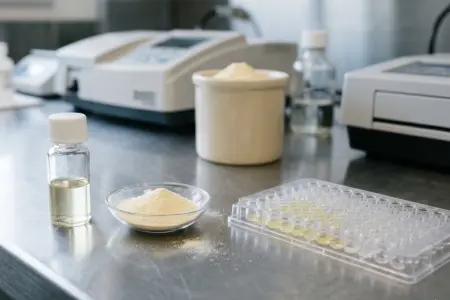
Enzymes and bioactives
Dry heat-sensitive enzymes and functional ingredients without cooking out their activity.
Why our spray dryers fit fermentation and protein work

Outlet temperature control preserves protein structure
Proteins and live cells finish their heat exposure at the outlet, not the inlet. Our dryers let you control outlet temperature, so you hold it low enough to keep protein structure and cell viability intact. In published probiotic work, optimized spray drying preserved around 92% of cell viability.

Short residence time limits denaturation
Droplets dry in seconds in our dryers, so the protein's effective heat exposure is brief. Sizing the dryer to your feed, rather than overdrying in an oversized unit, keeps residence time short and denaturation low.

Low holdup protects expensive feedstock
Precision-fermentation protein costs a lot to produce, so losing a large fraction to dead volume isn't acceptable at R&D scale. Our small-volume design keeps holdup low, so you recover most of what you feed in.

Bench to pilot on one platform
Develop the drying process on the ADL311SA, then move it to the DL410 when product development needs kilogram-scale batches. The controls and accessories carry across the line, so you scale without switching vendors.
Published research on spray-dried proteins and live cells
- A 2024 study in Food Science & Nutrition found that spray drying a probiotic at an optimized outlet temperature of 83 degrees C preserved about 92% of cell viability, and that higher temperatures cut survival.
- A 2022 study in Food Chemistry on co-spray-dried pea protein isolate shows how spray drying conditions shape the functional properties of plant protein. Outlet temperature and carrier choice are the levers in both.
Fermentation and protein spray drying FAQ
Yes, with outlet temperature control and a carrier. Because droplets dry in seconds, the protein's heat exposure is brief, and holding the outlet temperature low keeps the structure intact. The carrier protects the protein through drying and storage.
Often, yes. Optimized spray drying preserved around 92% of probiotic viability in published work. The keys are a protective carrier such as maltodextrin or skim milk, a low outlet temperature, and short residence time.
Maltodextrin, skim milk, trehalose, and gum arabic are common protectants, and the right one depends on your material. Bare protein or cells dried without a carrier survive poorly, so screen a protectant on the ADL311SA first.
The DL410 processes samples as small as about 0.5 g of solid matter, and our compact lab units dry small feed volumes, so you develop on small, expensive batches before scaling.
It depends on the protein, but published protein and probiotic work commonly runs outlet temperatures in the 70 to 90 degree C range, with the lower end safer for the most heat-sensitive materials. We help you find the setting that protects your specific feed.
Yes. Develop on the ADL311SA, then move the process to the DL410 for kilogram-per-day production. The controls carry across the line, so you don't re-tool or switch vendors.
Bring your protein spray drying in-house
Send us a sample of your broth or isolate and we'll spray dry it, then report back the powder and the parameters we used. Or talk to our application engineers about your material and batch size, and we'll recommend a configuration and a price.
References
Kaymak Ertekin F, et al. Enhancing Viability of a Probiotic Strain Through Optimized Spray Drying. Food Sci Nutr. 2024;12(12):10330-10346. doi.org/10.1002/fsn3.4572
Choe U, et al. Structural and functional properties of phosphorylated pea protein isolate by co-spray drying. Food Chem. 2022;393:133441. doi.org/10.1016/j.foodchem.2022.133441
No product defined
No product defined in this category.