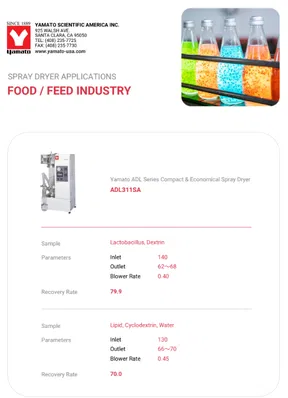
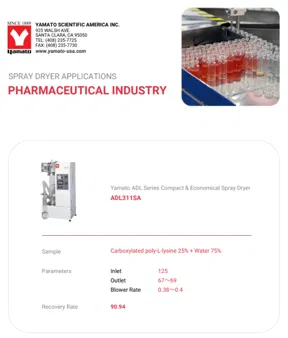
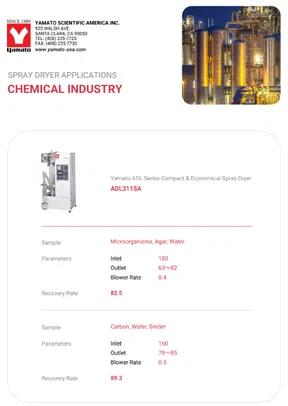
Lifecycle support as you scale up your process. Start at pilot scale, move to larger batches, and prevalidate your production-scalproduction-scale workflow before investing resources at the production scale. Our spray dryers help you build your process responsibly and scale up one step at a time.
Discovery/Bench Scale
ADL311SA
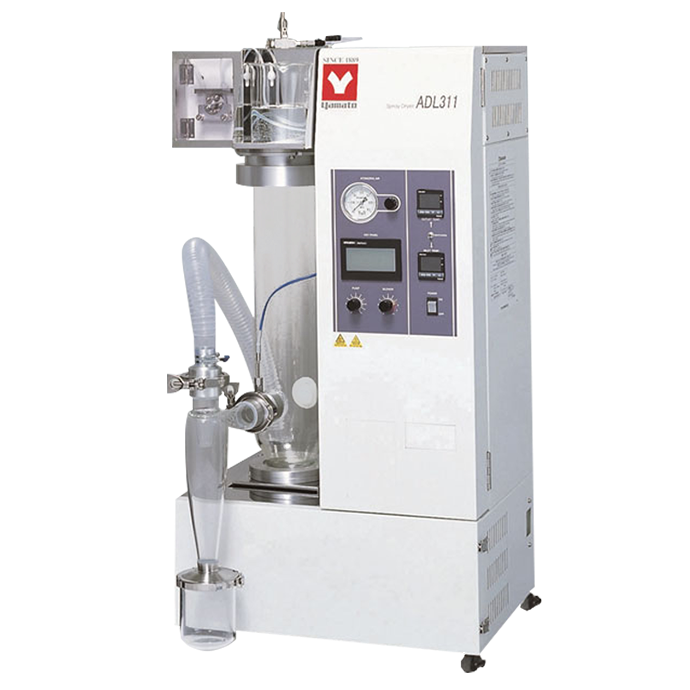
- Compact & economical lab spray dryer.
- Entry-level, mobile, single-user setup.
Exploring Formulations with Granulation
GB210B
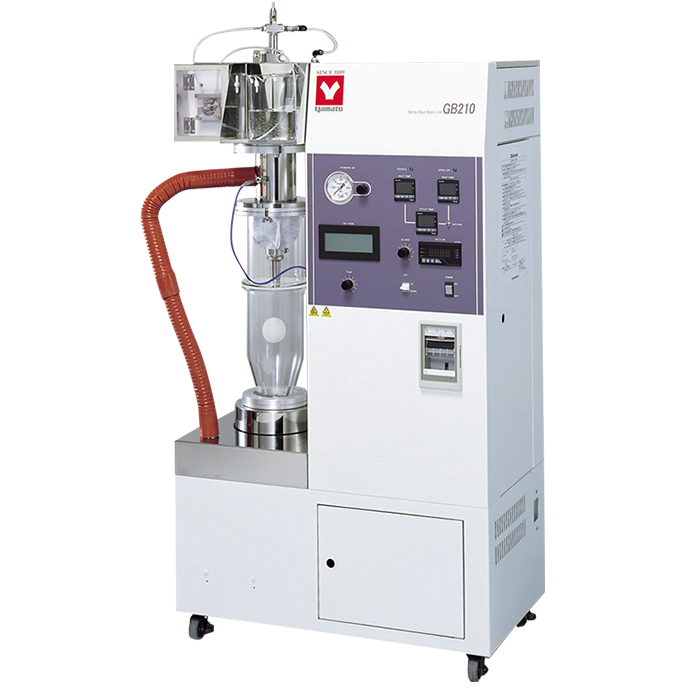
- Versatile granulation spray dryer.
- The GB210A platform configured for granulation.
Recover Organic Solvents
GAS410
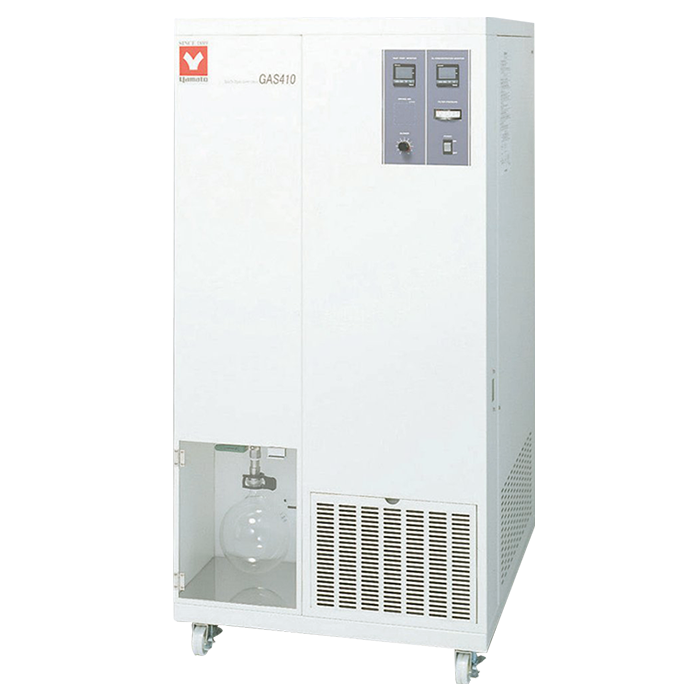
- Organic solvent recovery system.
- Closed-loop N₂ recovery for ADL, GB210A and DL410.
Exploring Formulations
GB210A
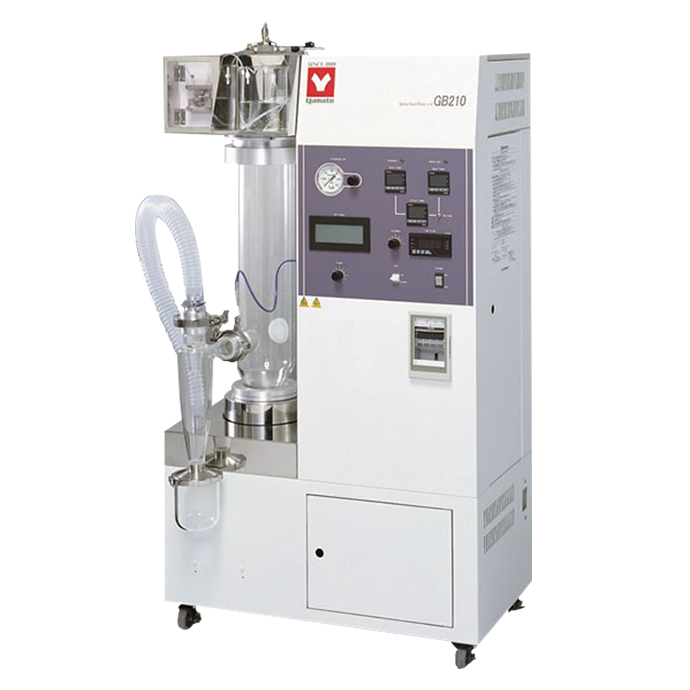
- Versatile mini spray dryer.
- Mid-size with electric lift and fluid bed swap option.
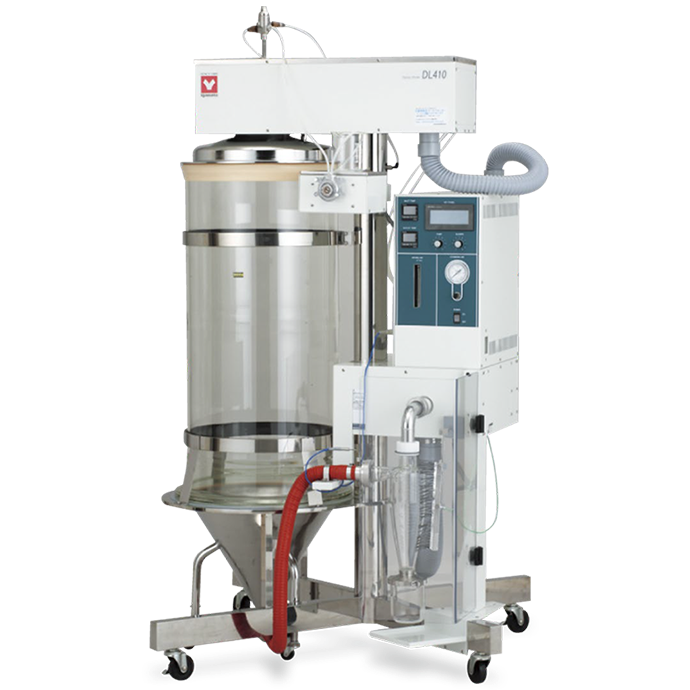
Used by your friends, colleagues, and competitors at...


Which spray dryer fits your work right now?
Most labs don't buy a spray dryer once.
They buy one to validate a process at bench scale to keep costs down. A second unit when the process needs to scale but isn’t ready for commercial production. And sometimes a 3rd unit to move to low pilot scale.
Our line is built so that ladder works without changing vendors or adjusting your process. The point is to make it easy for you to do all your preproduction work
| Stage in your workflow | Best-fit model | What it's built for |
| Discovery/bench (grams to mL samples) | ADL311SA |
|
| Process development (small batches, exploring formulations) | GB210A or GB210B |
|
| Pilot scale (kilogram batches, production-relevant testing) | DL410 |
|
| Add at any stage | GAS410, GWS410 |
|
If your process is heading toward scale-up in the next year or two, plan the equipment ladder together rather than buying piecemeal.
The same controls and accessories work across the Yamato line, so work that starts on an ADL311SA moves to a DL410 without retraining or re-tooling.
Investing budget in both at once also tends to be cheaper than two separate purchases.
Talk to a specialist about your scale-up plan
Where Yamato spray dryers do their best work
Yamato spray dryers handle dozens of different applications. In a handful of them, they're the standard piece of equipment in the lab. The sections below cover those, with a deeper write-up available behind each link.
Pharma spray-dried dispersions
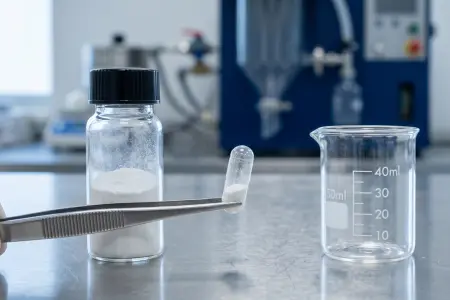
Amorphous solid dispersions for poorly water-soluble APIs. Bench-scale screening on the ADL311SA, process development on the GB210A, pilot batches on the DL410. Most SDD work runs in DCM, acetone, methanol, or ethanol, so the GAS410 closed-loop solvent recovery unit is usually part of the same purchase.
- Bench-scale SDD screening that consumes low amounts of API.
- Organic solvent compatibility via the closed-loop GAS410.
- Outlet temperature control that protects heat-sensitive APIs from degradation.
- Reproducible particle morphology across scale-up batches.
Battery and energy materials
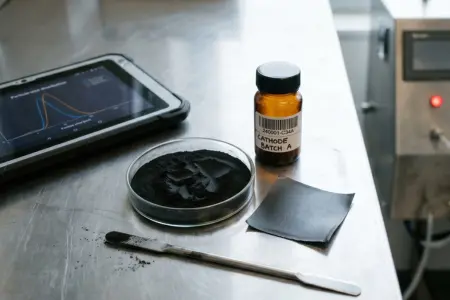
Cathode active materials, solid-state electrolytes, lithium-bearing compounds, fuel cell catalysts. Battery R&D teams work in grams at the discovery stage and in kilograms at pilot. The Yamato line covers both ends without switching vendors. For sulfide electrolyte and air-sensitive cathode work, the GAS410 closed-loop N₂ system keeps oxygen out of the dry chamber and recovers your solvent in the same loop.
- Cathode powder discovery at gram scale on the ADL311SA.
- LFP, NMC, and sulfide electrolyte slurry drying at pilot scale on the DL410.
- Air-sensitive chemistries via closed-loop N₂ inert atmosphere with GAS410.
- Particle morphology control for tap density and slurry coating work.
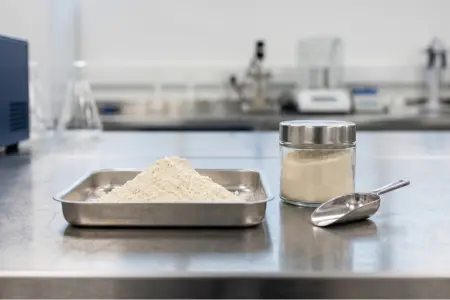
Precision fermentation and alt-protein
Animal-free dairy, plant protein isolates, microbial protein, and single-cell protein. These materials need their protein structure preserved through the drying step. Outlet temperature control and short residence time do that work better than raw throughput, which is why a properly sized Yamato dryer tends to outperform a bigger but less tunable unit on protein yield.
- Casein and dairy-equivalent protein from precision fermentation.
- Plant protein structuring for meat alternatives.
- Single-cell protein and microbial biomass drying.
- Heat-sensitive bioactive preservation via outlet temperature control.
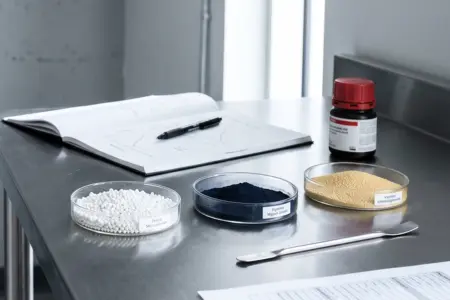
Specialty chemicals and catalysts
Pigments, polymer powders, zeolites, lignin derivatives, biorefining outputs, and inorganic specialty compounds. Most specialty chem customers buy the DL410 because they need to run 24-hour continuous shifts at kilogram-per-day output. The needle-knocker nozzle clean keeps the dryer running through the buildup that interrupts other equipment.
- Catalyst and zeolite powder production.
- Pigment dispersions for inks and coatings.
- Specialty polymer powders and lignin derivatives.
- 24-hour continuous run capability for steady-state production.
Academic, government, and federal research
University teaching and research labs run Yamato dryers across pharmacy, food science, chemical engineering, and materials science departments. DOE national labs and USDA research sites use them for energy materials and agricultural research. The ADL311SA's small footprint and built-in safety features make it the common first spray dryer in a teaching lab.
- Multi-program flexibility for shared university lab spaces.
- Federal procurement-ready: ISO 9001, 14001, and 13485 manufacturing certs.
- Student-safe operation with safety covers as standard equipment.
- Compact footprint that fits in shared lab spaces.
Real successes from your industry
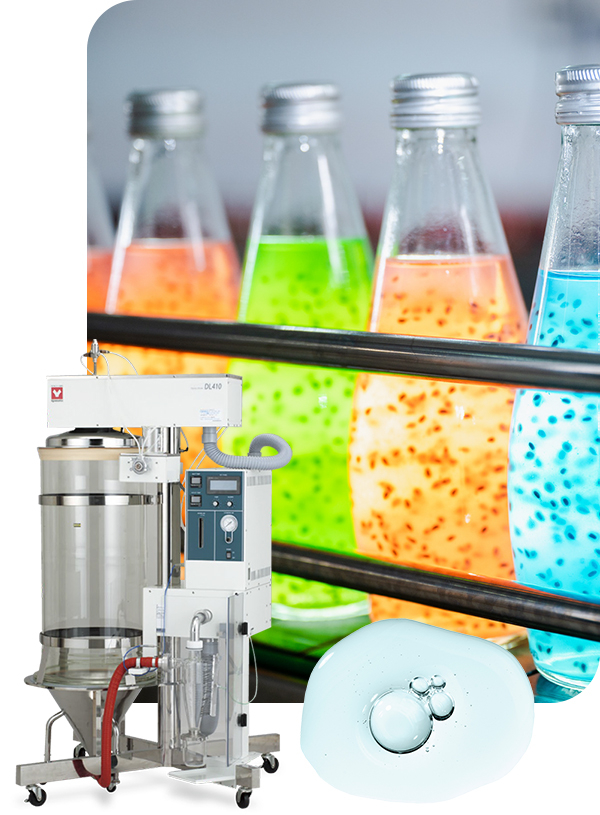
Spray dryer DL410 in food and beverage
Application: Emulsions
User Insights:
Why customers choose Yamato spray drying equipment?
“We selected this spray dryer over other options because 90% yield could be achieved at a price significantly cheaper than other similarly sized spray dryers."
The equipment additionally had a much shorter lead time than any other manufacturer.
Additionally, one of the benefits other users might not think about until after purchasing is that the operator can see the nozzle spray in the main chamber.
Here’s exactly what helped us achieve our goals:
- Dryer design leads to optimal yields (product pulled from the bottom of the main chamber as opposed to outlet arm)
- Evaporation capacity sized appropriately to our formulation’s total solids content
- Ability to spray dry a formulation that contains a solvent
- Cyclone optimally sized for target particle size and yields
- Small footprint
Why does this user recommend Yamato spray dryers?
“The dryer design is optimal. It allows us to achieve above average yields for spray drying. And Yamato’s customer service over the past 2 years has been excellent. Any questions have been answered in detail by Yamato’s technical service within 24 hours (usually much
quicker). Their reps are very thorough when troubleshooting issues and offer to work with customers over video chat.”
Lab spray dryer ADL311SA and GAS410 solvent recovery system in university labs
Application: Spray drying of drug infused polymer
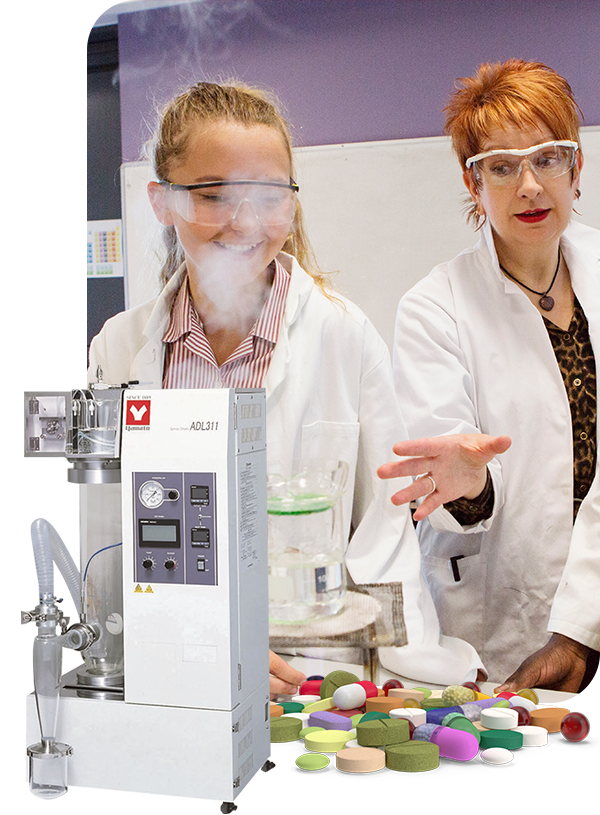
The lab was working on producing a non-sticky spray-dried powder from aqueous solutions of hygroscopic materials.
The source solution would jam up the spray nozzle on most spray dryers quickly, and the operator would spend more time cleaning the nozzle through the day than creating powder.
User Insights:
Why customers choose Yamato spray drying machine?
“Fortunately, the pulse jet switch on the touch panel and the plunger of the upper nozzle allow many hours of run time without disassembling and cleaning all the parts of the nozzle”
“The operator also uses Yamato’s solvent recovery system GAS410 along with the ADL311S spray dryer, “which allows us to spray aqueous, alcoholic, and hydroalcoholic solutions safely.”
“One of the features we really like is the specimen tray. Rather than forcing us to use a specific specimen container, we can easily place any beaker or sample container with a large volume on the specimen tray”
Why does this user recommend Yamato spray dryers?
“I would recommend this product because the unit is easy to operate, reliable, and Yamato’s customer service is good.”
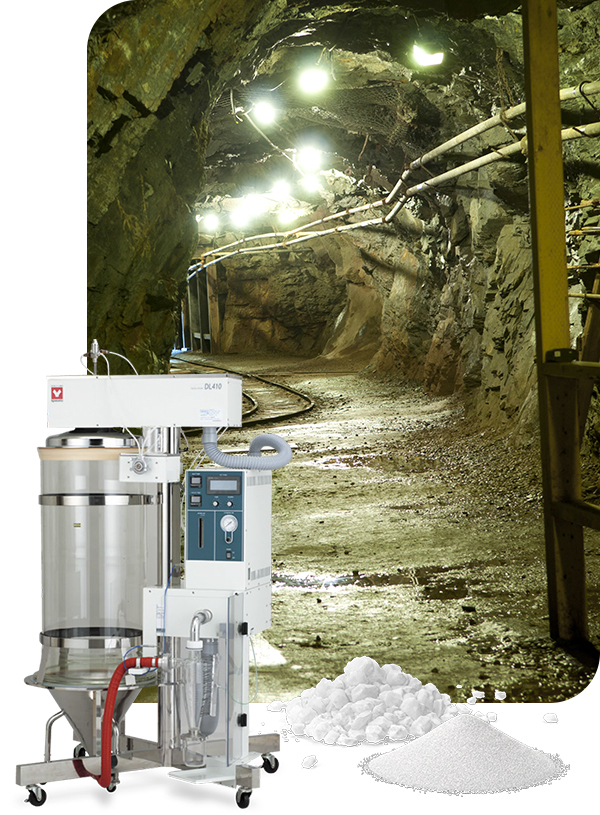
Spray dryer DL410 in metals, minerals & mining
Application: Amorphous silica production
User Insights:
Why customers make Yamato their spray dryer manufacturer?
“We were looking for a product to produce zinc sulfate mono hydrate powder from aqueous (non-organic solvent) solution containing about 0.5 kg zinc sulfate per liter. Wanted to produce about 5 kg per day (~10 L/day solution) with particle size of at least 100 microns. Wanted to run the unit 24 hours a day.”
“For us, the best feature might be the needle knocker/nozzle blower which can allow many hours of run time without cleaning. We installed a custom 5L collection jar equipped with band heater that allows us to spray dry 1kg at a time without the need to cool the unit and empty the jar. So the ability to run for a long time without cleaning is very valuable.”
Why does this user recommend Yamato spray dryers?
“I recommend this product because the unit is reliable, and customer service is good.”
Spray dryer GB210A and GAS410 solvent recovery system in preclinical drug product manufacturing
Application: Formation of enabled formulations to support preclinical development
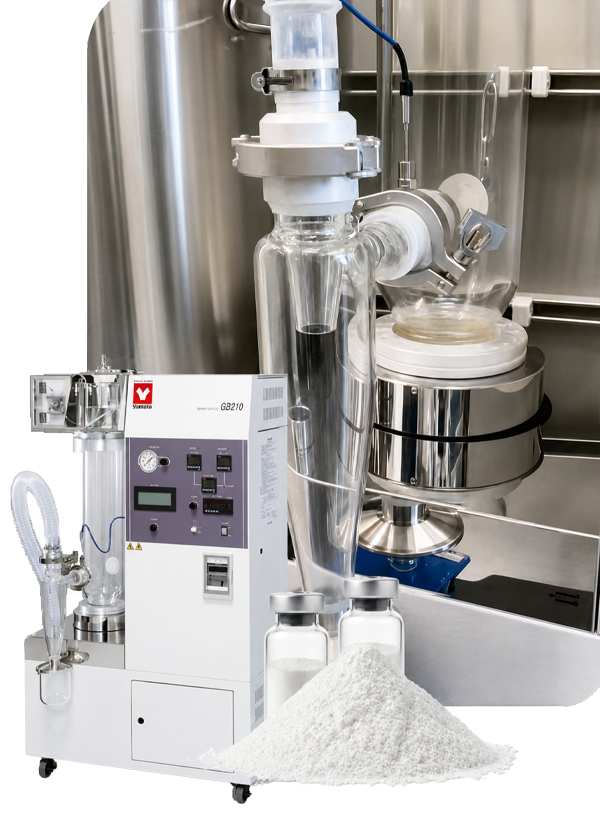
The user needed a closed loop spray dryer to allow for spraying of organic solvent based solutions. The spray dryer needed to support small scale pilot batches for initial characterization and larger scale production to support in vivo studies.
User Insights:
Why customers choose Yamato spray drying equipment?
“We invested in the GB210A and GAS410 to support preclinical development of our lead pharmaceutical candidates. The simplicity, robustness, and cost all contributed to our decision to purchase this spray dryer setup. In addition, the option to perform fluid bed drying on the same equipment is great to have for future formulation research.”
“We have used a technique to spray directly into small vials and jars, increasing the yield, especially for small scale batches”
Why does this user recommend Yamato spray dryers?
“Product support has been especially great. The team is very responsive and flexible in trying to help their customers.”
What's standard on a Yamato spray dryer
The features below ship as standard on every Yamato spray dryer. On competing lab units, several of them are accessories with a separate line item on the quote.

K-thermocouple temperature sensing
The K thermocouple sensor responds to a temperature change roughly three times faster than the PT-100 RTD sensors common in this category, because it carries far less thermal mass. In a spray dryer, where outlet temperature shifts second to second with feed rate and solids load, that speed lets the control loop catch and correct an excursion before it degrades a heat-sensitive sample. System control accuracy holds at ±1°C at the inlet. The result shows up in yield consistency batch to batch, lower product degradation, and predictable particle morphology.

Outlet temperature control
Every spray dryer controls inlet temperature. Yamato also lets you control outlet temperature, which is where heat-sensitive samples actually finish their thermal exposure. Outlet control protects proteins, APIs, cannabinoids, and any other temperature-sensitive material from the temperature drop or overshoot that ruins a batch.

Electric lift drying chamber
On the GB210A, the glass drying chamber removes and reinstalls with an electric lift. One person, no screws, a few seconds. On other lab spray dryers, this is a two-person job with screws and a real risk of dropping the chamber. The Yamato lift comes standard at no additional cost.

Fluid bed granulation with a single glassware swap
Swap the GF300 spray drying attachment for a GF200 fluid bed attachment and the GB210A becomes a fluid bed granulator. No second piece of capital equipment. No other lab spray dryer line offers this in a single platform, which means a lab that needs both capabilities can avoid roughly $100k of duplicate equipment.

Higher evaporation capacity per dollar
The GB210A runs 1.5 L/h H₂O at standard conditions, versus roughly 1.0 L/h H₂O on the comparable mid-size unit from the most common competitor. 50% more powder per shift, at a lower purchase price.

Pulse-jet and nozzle-knocker mechanisms
Hours of unattended run time without nozzle cleaning. Hygroscopic samples, sticky polymers, and high-solids feeds that jam other dryers run on a Yamato without interruption. The pulse-jet switch and physical needle knocker handle the buildup that usually requires a manual nozzle teardown mid-batch.

Sample and operator safety as standard
Safety covers, inlet and outlet overheat protection, oxygen monitoring (when paired with GAS410), N₂ closed-loop circulation, and electric leakage breakers all ship standard. On competing brands, several of those are paid accessories. If you're comparing quotes line-by-line, the difference adds up fast.
Lab spray dryer feature comparison at a glance
| Feature | Yamato (standard) | Typical competing lab unit |
| Temperature sensor response | ~3x faster (K thermocouple) | Slower (PT-100 RTD) |
| Outlet temperature control | Yes, standard | Inlet only on most lab units |
| Drying chamber removal | One-person electric lift (GB210A) | Two-person manual screw removal |
| Fluid bed granulation option | Glassware swap (no extra unit) | Requires a separate granulator |
| Evaporation capacity (mid-size unit) | 1.5 L/h H₂O | Roughly 1.0 L/h H₂O |
| Safety cover | Standard | Often a paid accessory |
| Solvent recovery (GAS410) | Integrated freezer + compressor | Sold as separate units |
Designed in Japan, sold and serviced in the US
Yamato has built scientific equipment in Japan since 1889. And we’ve been supporting science with spray dryers in North America for over 40 years.
- ISO 9001 (quality management), ISO 14001 (environmental management), and ISO 13485 (medical device manufacturing) certified.
- 1-year warranty on every spray dryer, with US-based technical support.
- Customer service responds to most questions inside 24 hours, and application support is available from spray dryer engineers with decades of experience.
- Crafted under the Kaizen principles Japanese tradesmanship is well known for.
Talk to a spray drying specialist
Tell us your sample, your batch size, and your solvent. A specialist will come back with the model that fits, the accessories you need, and what it costs. The form below goes to the same team. No bot, no autoresponder.
Talk to a specialist Send us your sample details
Laboratory Spray Dryers Frequently Asked Questions
Spray drying basics
A laboratory spray dryer turns a liquid sample, whether a solution, suspension, or emulsion, into a dry powder in a single continuous step. It atomizes the liquid into fine droplets, mixes them with heated air, and evaporates the solvent in seconds, leaving uniform particles. Labs use spray dryers for R&D and pilot-scale powder production across pharma, food, battery materials, cannabis, and specialty chemicals.
The sample is pumped to a nozzle and atomized into a spray of fine droplets inside a drying chamber. Heated air evaporates the solvent from each droplet almost instantly, and the dried particles are separated from the air in a cyclone and collected. Because the heat contact lasts only seconds, spray drying suits heat-sensitive materials that slower methods would degrade.
Most liquids that can be pumped and atomized can be spray dried, including aqueous solutions, suspensions, slurries, and emulsions. Common examples are pharmaceutical compounds, proteins and probiotics, battery cathode slurries, cannabinoid extracts, botanical extracts, catalysts, ceramics, and food ingredients. Samples containing organic solvents are spray dried in a closed-loop system with a solvent recovery unit.
Yamato lab spray dryers produce fine powders roughly in the 1 to 100 micron range, depending on the model and settings. The GB210A typically makes particles from 1 to 25 microns, and the DL410 covers 1 to 100 microns. Particle size is controlled through atomization, feed rate, and feed solids content.
They solve different problems. Spray drying is continuous, fast, and lower in cost per batch, which makes it the standard choice for producing powder at R&D and pilot scale. Freeze drying preserves the most fragile materials but runs slower and costs more. Many labs screen on a spray dryer first because of the speed and cost.
Choosing a Yamato spray dryer
It depends on your sample volume, batch size, and whether you use organic solvents. The ADL311SA is the compact, entry-level choice for bench and discovery work. The GB210A is a versatile mid-size unit that also runs fluid bed granulation. The DL410 is the pilot-scale unit for kilogram-per-day output. Any of them pairs with the GAS410 for organic-solvent samples.
The ADL311SA is the smallest and most affordable, built for bench-scale and mobile use. The GB210A handles very small samples, from about 30 mL, and converts into a fluid bed granulator with a glassware swap. The DL410 is the large-capacity pilot unit, with up to about 3 L/h evaporation and a 1 to 100 micron particle range. They share the same control approach, so moving up the line does not mean retraining.
The GB210A can dry feed volumes as small as about 30 mL, and the DL410 can process samples as small as roughly 0.5 g of solid matter. Small-sample capability matters most when your material is expensive or scarce, such as an experimental API or a novel cathode powder.
Yes. The line works as a ladder: bench work on the ADL311SA, process development on the GB210A, and pilot batches on the DL410. The controls and accessories carry across the line, so a process developed on a small unit transfers to a larger one without re-tooling or switching vendors.
Lab spray dryers are configured per application, so pricing depends on the model and the accessories you need, such as a solvent recovery unit or a fluid bed attachment. Yamato quotes each setup directly. Contact the team with your sample type and batch size for a configuration and price.
Spray dryers are capital lab instruments configured to your application, so they are quoted rather than sold through online checkout. Contact us with your requirements.
Technical capabilities
Yes, with the GAS410 organic solvent recovery unit. It runs the spray dryer as a closed loop under nitrogen, which keeps the process inert and explosion-safe and recovers the solvent instead of venting it. This setup is standard for pharmaceutical spray-dried dispersions and for ethanol-based cannabis and botanical extracts.
The GAS410 is a closed-loop organic solvent recovery system that connects to the spray dryer. You need it whenever your sample uses an organic solvent such as ethanol, methanol, acetone, or dichloromethane. It has an integrated freezer and compressor, recovers the solvent, and protects the operator through nitrogen inerting and oxygen monitoring.
Yes. Because the droplets dry within seconds, the material's effective heat exposure is very short. Yamato dryers also let you control outlet temperature, which is where heat-sensitive materials finish their thermal exposure, so proteins, probiotics, APIs, and cannabinoids can be dried without the degradation that slower methods cause.
Inlet temperature is the temperature of the heated air entering the chamber, and it drives how fast the solvent evaporates. Outlet temperature is the temperature of the air and particles leaving the chamber, and it determines the actual heat your product experiences and its final moisture. Every spray dryer controls inlet temperature; Yamato also lets you control outlet temperature for tighter protection of sensitive samples.
A K-thermocouple responds to a temperature change about three times faster than the PT-100 RTD sensors common in this category, because it has much lower thermal mass. In spray drying, where the outlet temperature shifts second to second with feed rate and solids load, that faster response lets the control loop catch and correct a swing before it degrades a sensitive sample. System control accuracy holds at plus or minus 1 degree C at the inlet.
Yes. The GB210A converts into a fluid bed granulator by swapping the spray drying glassware for a GF200 fluid bed attachment, so one platform covers both spray drying and granulation without a second instrument. Spray drying itself is also widely used for microencapsulation, where an active is coated in a carrier material to protect it and control release.
For aqueous samples on the ADL311SA, a spray air compressor is used and sold separately. When you run organic solvents with the GAS410, its integrated compressor handles the spray air, so no separate compressor is required. The team will confirm what your specific configuration needs.
The units are designed for a small footprint. The ADL311SA is compact and mobile on casters, or it can sit on a bench. The GB210A and DL410 are larger floor units but still sized for a standard lab. Exact dimensions are listed on each product page.
Yes. The DL410 is built for 24-hour continuous operation, and the nozzle's needle-knocker cleaning mechanism clears buildup so the unit runs for hours without a manual nozzle teardown. This matters for specialty chemical and catalyst production where steady-state runs are the norm.
Applications
Yes. Spray drying produces spherical, uniform secondary particles that improve tap density and slurry coating, which is why it is widely used for cathode active materials, LFP, and solid-state electrolytes. Air-sensitive sulfide chemistries run under the GAS410's closed-loop nitrogen system. See the battery and energy materials page for starting parameters.
Yes. Spray drying encapsulates cannabinoid distillate or extract in a carrier to produce a water-dispersible powder for beverages, gummies, and capsules. Ethanol-based extracts run with the GAS410 for closed-loop solvent recovery, which also addresses fire-code concerns. See the cannabinoid encapsulation page for details.
Yes. Spray drying is a mainstream method for amorphous solid dispersions that raise the solubility and oral bioavailability of poorly water-soluble drugs. The work usually runs in organic solvents with the GAS410 attached, and outlet temperature control keeps the dispersion from recrystallizing. See the pharma spray-dried dispersions page.
Yes, with outlet temperature control and a carrier or protectant. Published work has preserved around 92% of probiotic viability with optimized spray drying, and the same principles apply to precision-fermentation proteins and plant proteins. Keeping the outlet temperature low and the residence time short is the key. See the precision fermentation page.
Yes. Spray drying turns inorganic slurries into free-flowing microspheres, typically 20 to 150 microns, for catalyst supports, zeolites, and ceramics. Mill the slurry to your target primary particle size first, because the dryer shapes the microsphere rather than the crystal. See the specialty chemicals and catalysts page.
Yes. Spray drying with a carrier such as maltodextrin or gum arabic turns polyphenol-rich botanical extracts, hops, and superfoods into stable powders that protect the actives. Carrier choice and ratio drive yield and protection. Ethanol or hydroalcoholic extracts run with the GAS410. See the botanical extracts page.
Ownership, support, and buying
The units are built for one-person operation. The drying chamber, cyclone, and product vessel detach for fast cleanup, and the GB210A uses an electric lift to remove the glass chamber without screws or a second person. The touch-panel controls handle the blower, heater, pump, and pulse-jet cleaning.
Yes. The ADL311SA is a common first spray dryer in teaching and research labs because of its compact footprint, low purchase price, and standard safety features. One unit can serve pharmacy, food science, chemistry, and materials programs, which makes it a flexible shared instrument.
Every Yamato spray dryer comes with a 1-year warranty and US-based technical support. We typically respond to questions within 24 hours. Yamato has sold and serviced spray dryers in North America for over 40 years.
Yes. Yamato manufactures under ISO 9001, ISO 14001, and ISO 13485 certifications and provides a 1-year warranty, which supports procurement requirements at national labs, universities, and regulated manufacturers. Our team can provide documentation for purchasing and qualification.
Yes. The best way to confirm a model fits your application is to share your sample type, batch size, and solvent with the team. Tell them what you are trying to make and they will recommend a configuration. Contact us to get started.
Research and references
The claims on this page about solubility, particle morphology, and heat-sensitive drying come out of peer-reviewed research. The sources below are a place to start.
- Pharma spray-dried dispersions. Davis M, Walker G. Recent strategies in spray drying for the enhanced bioavailability of poorly water-soluble drugs. J Control Release. 2017;269:110-127. doi.org/10.1016/j.jconrel.2017.11.005
- Pharma bioavailability (atorvastatin). Kwon J, et al. Spray-Dried Amorphous Solid Dispersions of Atorvastatin Calcium for Improved Supersaturation and Oral Bioavailability. Pharmaceutics. 2019;11(9):461. doi.org/10.3390/pharmaceutics11090461
- Heat-sensitive drying and outlet temperature. Kaymak Ertekin F, et al. Enhancing Viability of a Probiotic Strain Through Optimized Spray Drying. Food Sci Nutr. 2024;12(12):10330-10346. doi.org/10.1002/fsn3.4572
- Microencapsulation of bioactives. Halahlah A, et al. Polysaccharides as wall materials in spray-dried microencapsulation of bioactive compounds. Crit Rev Food Sci Nutr. 2022;63(24):6983-7015. doi.org/10.1080/10408398.2022.2038080
- Cannabinoid solubility and bioavailability. Provenzano R, et al. Enhancing transmucosal delivery of CBD through nanoemulsion: in vitro and in vivo studies. Drug Deliv Transl Res. 2023;14(6):1648-1659. doi.org/10.1007/s13346-023-01481-x
- Battery and electrode materials. Vertruyen B, et al. Spray-Drying of Electrode Materials for Lithium- and Sodium-Ion Batteries. Materials (Basel). 2018;11(7):1076. doi.org/10.3390/ma11071076