Lab Spray Drying for Battery Cathode & Electrode Materials
Turn experimental cathode and electrolyte slurries into spherical, uniform powder, from gram-scale discovery to pilot batches.
We build lab spray dryers for the part of battery R&D where the material is scarce and the chemistry is unforgiving. Whether you're drying a few hundred milligrams of a new cathode or running LFP at pilot scale, our dryers give you spherical secondary particles, controllable tap density, and closed-loop handling for air-sensitive sulfide work.
Which model fits your battery work
| Model | Best for battery work | Notes |
ADL311SA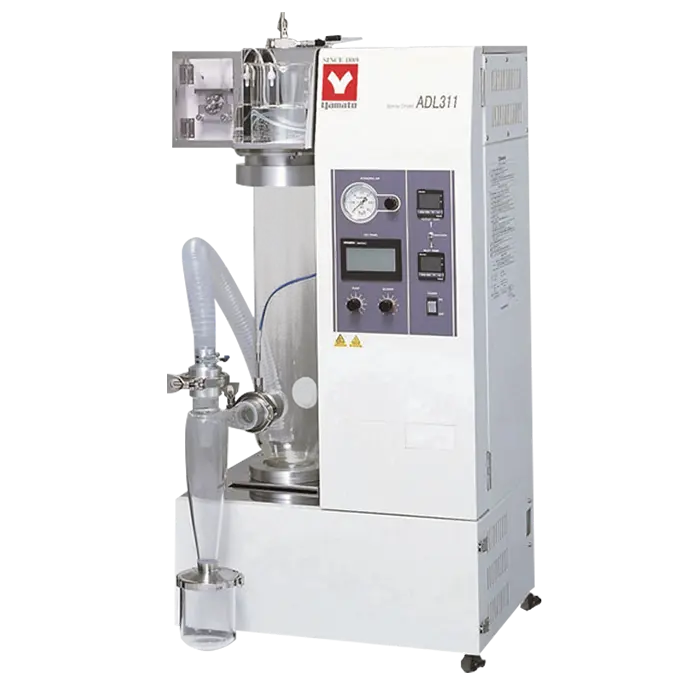 | Discovery and gram-scale cathode screening |
|
DL410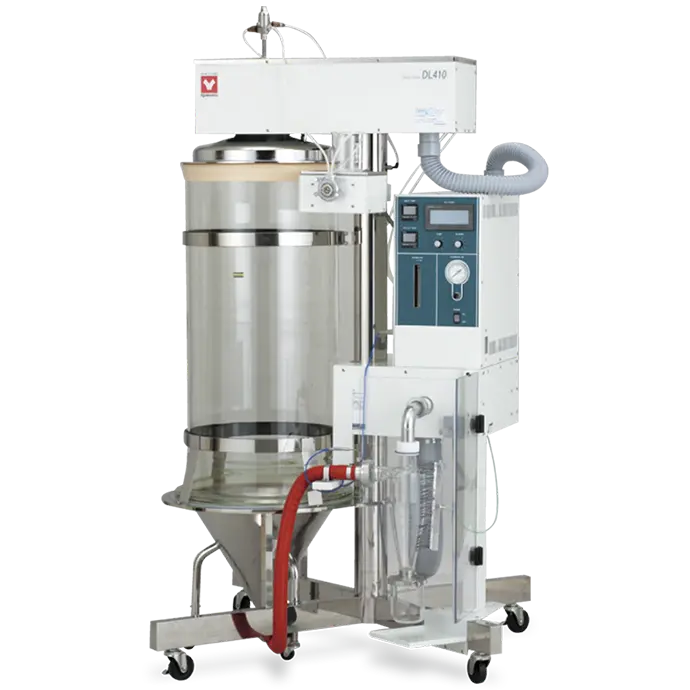 | Pilot-scale cathode and electrolyte production |
|
GAS410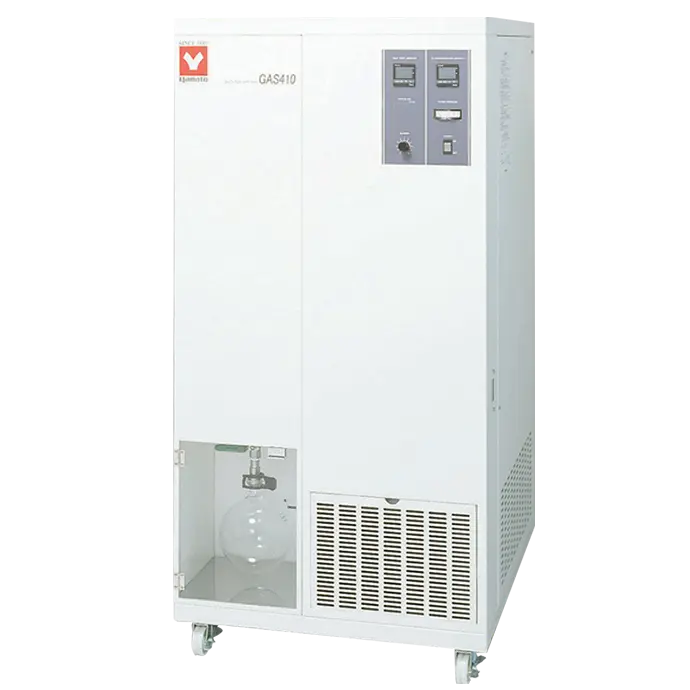 | Air-sensitive and organic-solvent chemistries |
|
Why battery materials get spray dried in the lab
Cathode active materials, solid-state electrolytes, and their precursors perform better as spherical secondary particles. Spherical powder packs to a higher tap density, coats more evenly into an electrode, and flows better through your process than milled, angular powder. Spray drying builds those spheres in one continuous step, which is why it runs through cathode discovery, LFP and NMC production, and solid-state electrolyte work.
Battery drying carries two constraints that ordinary powder drying doesn't. The experimental material is often scarce and expensive, so losing a third of it to dead volume in an oversized dryer wrecks the run. And sulfide solid electrolytes and some cathode precursors react with air and moisture, so you can't dry them in an open system.
We build for both.
Get in touch with us to validate your application
Battery applications our laboratory spray dryers handle
- Cathode active materials. Spray dry NMC, LFP, and new cathode chemistries into spherical secondary particles with controllable tap density.
- Solid-state electrolytes. Dry sulfide and oxide electrolyte powders under a closed-loop nitrogen atmosphere that keeps oxygen and moisture out.
- Precursor synthesis. Produce homogeneous precursor powders from mixed-metal solutions in one step, with no separate filtration or milling.
- Lithium compounds. Dry lithium-bearing salts and intermediates for battery and catalyst use.
- Carbon-coated and conductive composites. Spray dry carbon-coated actives and conductive blends with even coating across the particle.
Why our spray dryers fit battery R&D
Closed-loop nitrogen for air-sensitive chemistry
Sulfide solid electrolytes and some cathode precursors oxidize in air. Pair any of our dryers with the GAS410 and you run the whole process as a closed loop under nitrogen, with oxygen monitoring and solvent recovery built in. You dry air-sensitive material without exposing it to the room.
One vendor from bench to pilot
Start cathode discovery on the ADL311SA, then move the same process to the DL410 for kilogram-per-day pilot batches. The controls and accessories carry across the line, so you scale up without re-tooling or switching vendors.
Low holdup protects scarce material
Our small-volume design lets you spray dry a few hundred milligrams of an experimental cathode without losing most of it to dead volume. When a gram of a new chemistry takes weeks to synthesize, low holdup decides whether you get a usable result or a wasted batch.
Faster temperature response for consistent particles
Our K-thermocouple sensor responds to a temperature change about three times faster than the PT-100 RTD sensors common in this category, because it carries far less thermal mass. Outlet temperature moves second to second with feed rate and solids load, and that faster response lets the control loop hold a steadier outlet, so your particle morphology stays consistent batch to batch. System control accuracy holds at plus or minus 1 degree C at the inlet.
Published research on spray-dried electrode materials
A 2018 review in *Materials surveyed more than 300 published studies on spray drying of lithium- and sodium-ion electrode materials. It documents that spray drying produces spherical secondary particles with uniform size, which improves tap density and electrode slurry rheology, and that the process scales from the lab to industrial quantities. Published LFP work reports spray-dried microspheres reaching tap densities of 1.4 to 1.6 g/cm3.
*see end of page
Battery spray drying in the lab FAQ
Yes. Pair any of our spray dryers with the GAS410 and you run the process as a closed loop under nitrogen, with oxygen monitoring throughout. The material never sees the open room, so air- and moisture-sensitive sulfide electrolytes stay intact.
Our dryers produce spherical secondary particles roughly in the 5 to 25 micron range, with the DL410 reaching up to 100 microns. You control the size through atomization, feed rate, and solids content. Spray drying shapes the secondary particle, so mill your slurry to the target primary size first.
The DL410 processes samples as small as about 0.5 g of solid matter, and our low-holdup design recovers most of an expensive experimental batch. This matters when a new cathode chemistry takes weeks to make.
Yes. Spray drying builds spherical secondary particles that pack more densely than milled, angular powder, which raises tap density and improves how the material coats into an electrode. Published LFP studies report tap densities of 1.4 to 1.6 g/cm3.
Yes. Develop the process on the ADL311SA at gram scale, then move it to the DL410 for kilogram-per-day pilot batches. The controls and accessories carry across the line, so you don't re-tool or change vendors.
Mill before. The spray dryer controls the spherical agglomerate, not the primary crystal, so set your primary particle size in the slurry first, then dry to build the secondary particle.
Published research on spray-dried electrode materials
Send us a sample of your slurry or solution and we'll spray dry it, then report back the powder and the parameters we used. Or talk to our application engineers about your chemistry and batch size, and we'll recommend a configuration and a price.
References
Vertruyen B, et al. Spray-Drying of Electrode Materials for Lithium- and Sodium-Ion Batteries. Materials (Basel). 2018;11(7):1076. doi.org/10.3390/ma11071076
No product defined
No product defined in this category.