MARS® Bar
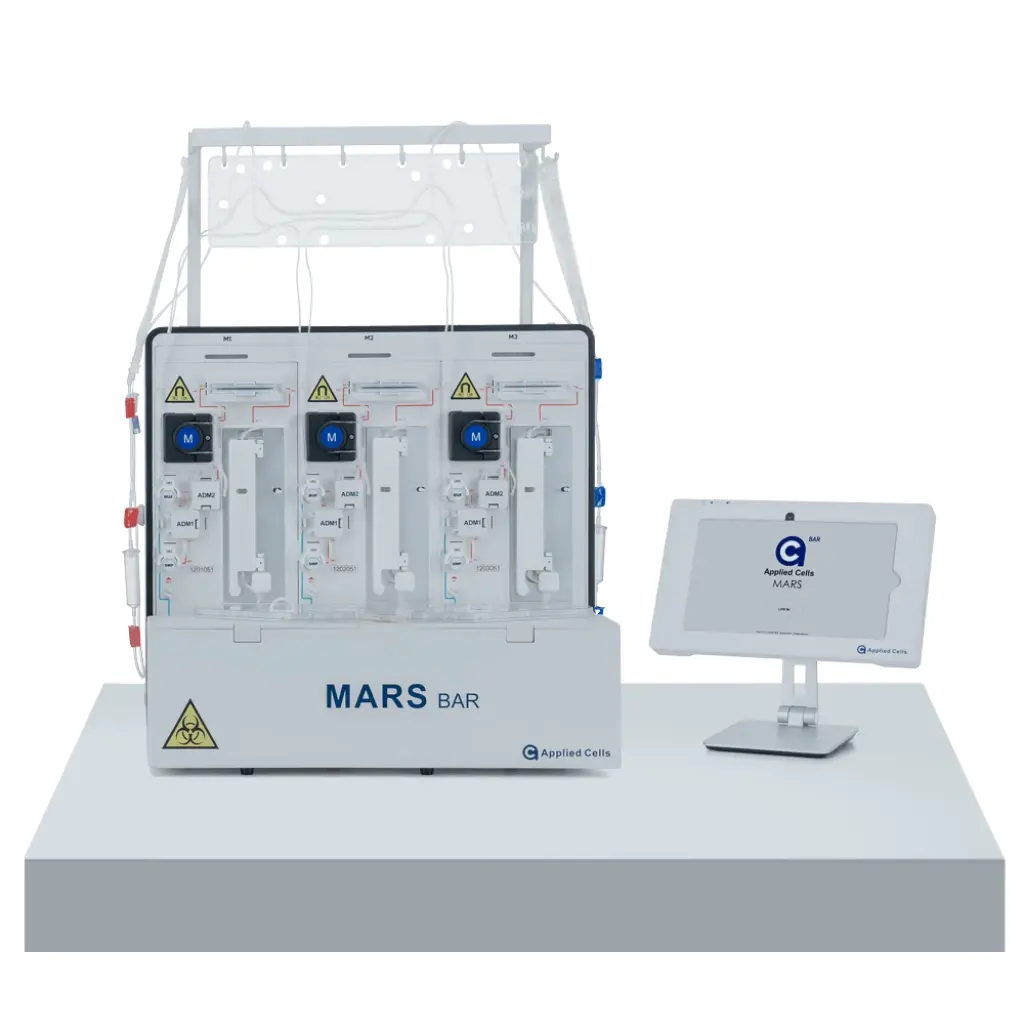
An automated cell isolation system with no columns to clog
Stay on one system from small scale optimization all the way up to manufacturing.
The light you use to view a gel impacts whether the DNA on it is still usable afterward. UV transilluminators damage the sample while you look at it, which shows up later as failed ligations and low cloning efficiency, and they burn unprotected eyes and skin in the process. The BluPAD excites fluorescent DNA stains with 470 nm blue LED light instead, so the bands glow, the DNA stays intact, and nobody needs a face shield.
A second, white light mode handles Coomassie and silver stained protein gels plus X-ray film viewing, making the BluPAD one compact LED transilluminator for both nucleic acid and protein work.
Column-free immunomagnetic cell separation in open flow channels. No matrix, no clogging.
Unlimited sample capacity: bound cells release cyclically until the whole sample is processed
Automated positive and negative selection with optimized, reproducible protocols.
Closed, sterile, gamma-irradiated single-use fluidics built for cleanroom and GMP workflows.
Manufactured under ISO 13485:2016-certified quality systems.
Processes whole blood, cord blood, PBMC, and fresh or frozen leukopak.
Isolation of T cells, monocytes, NK, stem cells and many others
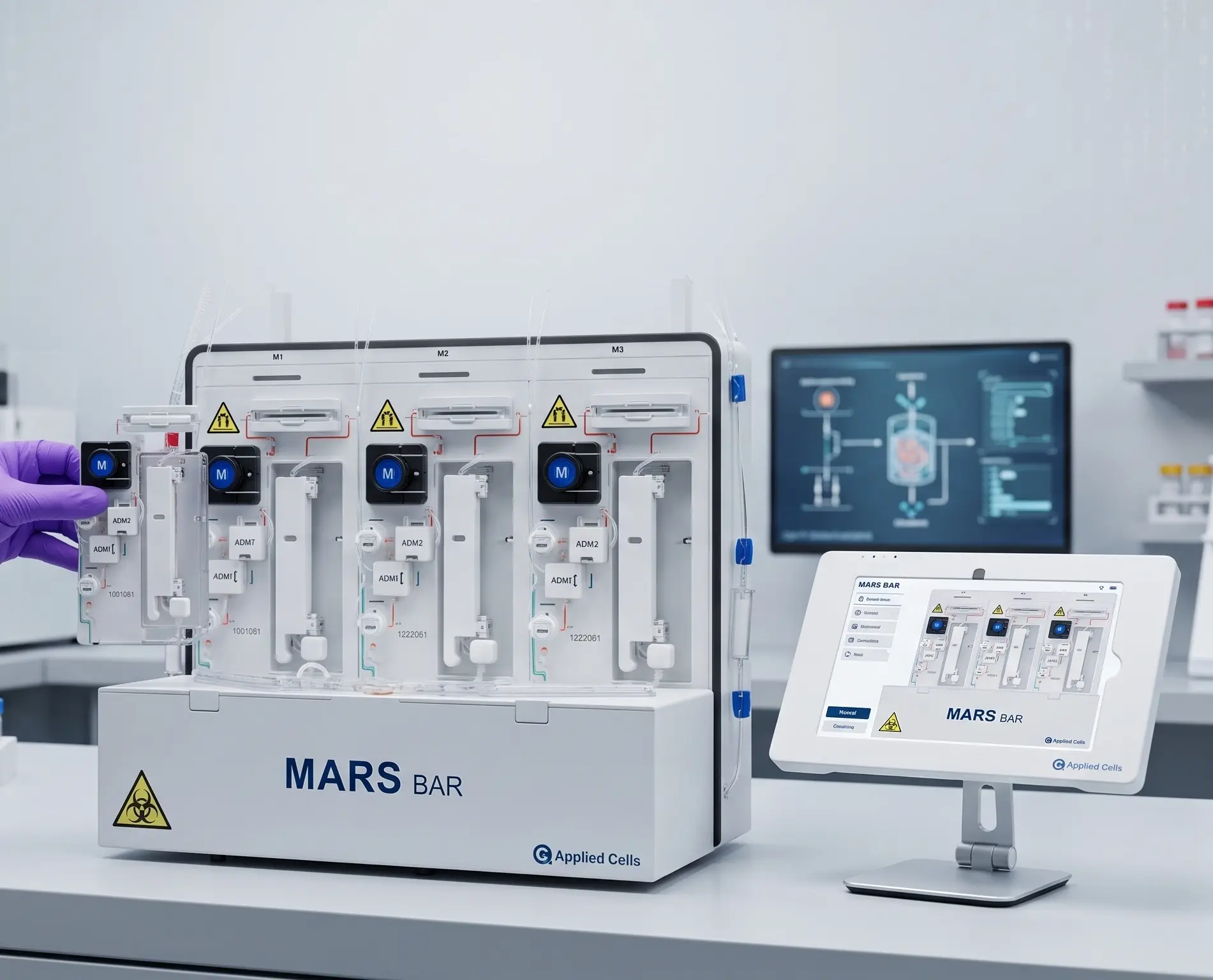
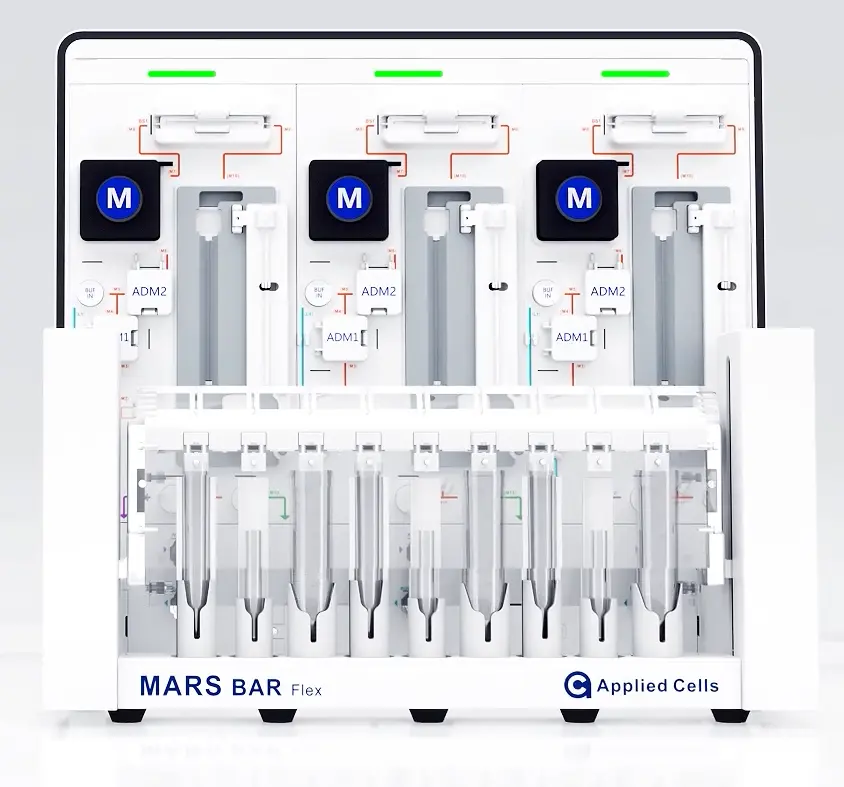
How column-free immunomagnetic cell separation works
Immunomagnetic cell separation starts with magnetic beads coated in antibodies against your target cell’s surface marker. Mix the beads with the sample, and they bind only the cells you want. From there, most systems push the sample through a column packed with a magnetizable matrix that holds the tagged cells while everything else washes through.
The MARS Bar skips the column. Bead-bound cells separate from unbound cells directly in flow channels under a magnetic field.
Dead volume drops and almost no cells get trapped in the system, which is where column workflows bleed recovery.
A built-in release cycle elutes captured cells at pre-defined intervals until the entire sample is processed, giving the system unlimited capacity and preventing clogging on large or dense samples
The same MARS Mag modules run automated cell enrichment (positive selection) or depletion (negative selection) with optimized protocols for reproducible results
Cells elute directly into media suited for immediate downstream steps like activation and expansion, with no centrifugation required.
Column-free vs. column-based magnetic cell separation
Designed to optimize workflows in the clean rooms, MARS® Bar provides flexibility and scalability, facilitating effortless protocol optimization on large scale. Accommodating various sample types and volumes with minimal hands-on time, the system guarantees high purity and recovery rates while prioritizing gentle treatment to preserve cell viability.
Lower reagent and sample consumption per run compounds the difference. When each isolation costs less and recovers more, protocol optimization gets cheaper and the economics of an entire development program shift.
Closed system cell processing, from protocol optimization to cell therapy manufacturing
The MARS Bar is designed for the environment where cell therapy development actually happens: cleanrooms, GMP workflows, and quality systems that will face an auditor...
 Fully closed, sterile fluidics. Gamma-irradiated single-use tubing and bag sets keep the sample path sealed from load to collection.
Manufactured under ISO 13485:2016-certified quality systems, with products aligned to CE, GMP, and RoHS standards and documentation support for regulatory filings.
Automated protocols with minimal hands-on time, cutting the operator variability that complicates process validation.
One platform covers T cell enrichment \, so the protocol you optimize at the bench is the protocol you scale.
Available RUO configuration relying on exactly the same technology, makes scaling to cleanroom unusually easy.
The MARS Bar is for research use only. Its GMP-ready design supports teams building toward manufacturing, without the platform switch that forces re-validation midway through development.
T cell isolation and other cell therapy workflows
Optimized MARS Bar workflows cover the isolations cell therapy programs run most...
T cell isolation for CAR-T manufacturing: direct from fresh leukopak, washed leukopak, whole blood, or PBMC, including CD3/CD28+ selection.
CD34+ hematopoietic stem cell isolation for stem cell therapy development.
CD14+ monocyte isolation for vaccine development and monocyte-based workflows.
NK cell, TIL, and neutrophil immunoselection with centrifuge-free and Ficoll-free workflows.
Performance example: T cell isolation direct from leukopak
Leukopaks concentrate the starting material, but conventional T cell isolation from them piles on washing steps that add time and lose cells. Running direct from leukopak on the MARS Bar with 50 nm CD4 and CD8 magnetic beads, Applied Cells reports T cell purity raised from 47.0% in the starting material to 94.3% after separation, with viability around 94.6% and recovery of 68.3%, with no centrifugation steps in the workflow.
Cell separation instrument at a glance
Which labs get the most from this automated cell isolation system
The MARS Bar fits programs where cell recovery, run economics, and a clean scale-up path decide timelines.
CAR-T and adoptive cell therapy process development teams isolating T cells from leukopak at increasing scale.
Cell therapy developers who need one platform to carry protocols from bench optimization toward manufacturing without re-validation.
CDMOs and manufacturing groups standardizing on closed system cell processing for cleanroom environments.
Vaccine development programs running monocyte-based workflows.
Stem cell therapy programs isolating CD34+ cells where recovery from limited material matters.
Labs replacing manual column workflows that clog, lose cells, and consume a column budget every run.
Common questions about automated cell isolation
Automated cell isolation uses an instrument to separate a target cell type from a mixed sample like blood or leukopak with minimal hands-on work. Automating the separation removes operator-to-operator variability, shortens hands-on time, and produces reproducible purity and recovery from run to run, which matters most in workflows headed toward process validation.
Immunomagnetic cell separation uses magnetic beads coated with antibodies that bind a surface marker on the target cells. Once the beads attach, a magnetic field pulls the tagged cells away from the rest of the sample. The approach isolates specific cell types like CD4/CD8 T cells, CD34+ stem cells, or CD14+ monocytes with high specificity.
Column-based systems hold magnetically tagged cells in a matrix-packed column while other cells wash through. The matrix traps cells, adds dead volume, clogs on dense samples, and caps capacity at the column size. The MARS Bar separates cells in open flow channels with no matrix, then releases captured cells cyclically until the full sample is processed, so recovery is higher and capacity is unlimited.
Positive selection targets the cells you want: beads bind the target cells and the magnet captures them. Negative selection targets everything else: beads bind the unwanted cells, and your target cells flow through untouched by beads. Positive selection generally gives higher purity, while negative selection leaves target cells label-free. The MARS Bar runs both with automated protocols.
FACS sorts cells one at a time with high precision, which makes it powerful for multi-parameter sorting but slow and stressful on cells for bulk isolation. Magnetic separation processes entire samples in parallel, gently and quickly, which suits isolating large numbers of a defined cell type. Many workflows use magnetic separation for bulk enrichment and reserve FACS for analysis or fine sorting afterward.
Whole blood, PBMC, and fresh or frozen leukopak, along with other blood and bone marrow cell products. Workflows are centrifuge-free and Ficoll-free, so samples move to separation without the pre-processing steps that cost time and cells.
The MARS Bar is manufactured under ISO 13485:2016-certified quality systems and designed to meet cleanroom and GMP workflow requirements, with fully closed sterile fluidics and single-use consumables. The system is labeled for research use only and supports cell therapy development programs building toward GMP manufacturing.
Sterile, gamma-irradiated single-use tubing sets and containment bags: 100 mL bags for sample input and positive collection, and 500 mL bags for buffer and negative collection. There are no dedicated separation columns to purchase.